
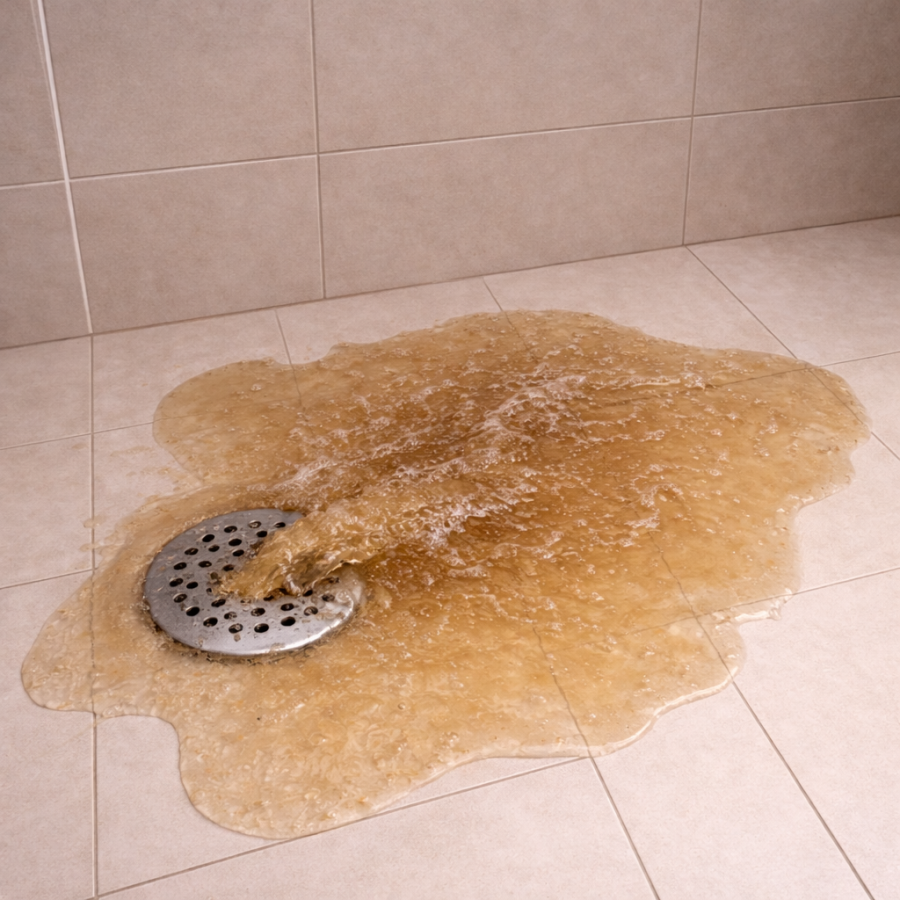
Sewage Backing Up? What It Means and What to Do Next
Date Published: April 29, 2026, Last Updated on May 1, 2026 by Matthew Carter
When sewage starts backing up into your home, it is not just unpleasant. It is a serious plumbing problem that needs urgent attention.
You might notice dirty water coming up through a shower drain, a toilet that will not flush properly, or a strong sewage smell near sinks and bathrooms.
In most cases, sewage backing up means there is a deeper issue in your drainage system, and the longer it is left, the worse the damage can become.
In this guide, we explain what sewage backing up usually means, what causes a blocked sewer drain, what you should do immediately, and when to call a licensed plumber.
Having a blocked sewage system? Call Adept Plumbing & Gas on 07 3520 7195 or submit an enquiry for fast, professional emergency plumbing in Logan.

Why is an overflowing or backed-up sewage a serious problem
Sewage backup is more than a blocked drain. It means wastewater is no longer flowing away from your home the way it should.
Instead of leaving through the sewer line, that waste starts coming back through the lowest points in your plumbing system. This often affects:
- Toilets
- Showers
- Floor wastes
- Laundry drains
- Outdoor inspection points
Backed-up sewage creates a health risk, can damage your property, and often points to a larger issue in the main sewer line.
What usually causes sewage to back up?
There are several reasons why sewage may back up into a home or business. Some are minor at first, but most become more expensive if left too long.
Blocked sewer drain
A blocked sewer drain is one of the most common causes. This happens when the main drain line becomes obstructed, and wastewater has nowhere to go.
Common causes include:
- Excess toilet paper
- Wet wipes and sanitary items
- Foreign objects flushed down toilets
- Grease and waste buildup
- Tree roots entering cracked pipes
- Collapsed or damaged sewer pipes
If the blockage is deep in the line, simple DIY methods will not fix it.
Tree root intrusion
Tree roots naturally seek moisture, and even a small crack in an underground pipe can attract them. Once roots enter the sewer line, they expand and begin to catch waste and debris, eventually restricting water flow.
If your home is older or surrounded by mature trees, this is a common cause of recurring sewer problems.
Damaged or collapsed pipes
Old or poorly installed pipes can crack, sag, or collapse over time. When that happens, waste can no longer flow properly through the sewer line, leading to backups.
Heavy use across multiple fixtures
In some cases, the problem only becomes obvious when multiple fixtures are used close together. If the sewer line is already partly blocked, running the washing machine, flushing toilets, and using the shower can cause sewage to back up quickly.
Signs your sewer line has plumbing issues
Sometimes the warning signs appear before a full backup happens. Knowing what to look for can help you act early.
Common signs include:
- Water rising in the toilet after flushing
- Gurgling sounds from drains
- Dirty water coming up through the shower or floor waste
- Strong sewage odours inside or outside the home
- Multiple drains are slowing down at once
- Overflow at outdoor sewer points
If more than one fixture is affected, the issue is usually not localised to one bathroom or kitchen drain. It often points to the main sewer line.
What to do next if sewage is backing up
If you notice sewage backing up, act quickly. The goal is to reduce further contamination and prevent more wastewater from entering the home.
1. Stop using water immediately
Do not flush toilets, run taps, use washing machines, or take showers. Any additional water entering the system can worsen the backup.
2. Keep people and pets away from the area
Raw sewage is contaminated and should be treated as a health hazard. Keep children and pets clear of any affected area.
3. Avoid contact with wastewater
If sewage has entered the home, avoid touching it and do not try to clean it without proper protection. Contaminated water can carry harmful bacteria.
4. Call a licensed plumber straight away
A professional plumber can inspect the sewer line, locate the blockage, and clear it safely using the right equipment.
What plumbers do to fix sewage backing up
When sewage is backing up, plumbers need to identify the cause before deciding on the best repair method.
This may involve:
CCTV drain camera inspection
A drain camera is used to inspect the inside of the sewer line and pinpoint exactly what is causing the blockage. This helps identify roots, foreign objects, damage, or collapsed sections.
High-pressure water jetting
If the blockage is caused by buildup, waste, or roots, high-pressure jetting is often used to clear the line and restore flow.
Mechanical root cutting
Where roots are dense and tightly packed, mechanical cutting equipment may be used before further cleaning or repair.
Pipe relining or excavation
If the sewer pipe is cracked, collapsed, or badly damaged, pipe relining or excavation may be necessary to prevent ongoing problems.
Can sewage backing up be fixed with DIY methods?
In most cases, no.
A plunger may help with a local blockage in one toilet, but when sewage is backing up through multiple fixtures, the problem is usually too deep in the sewer line for DIY tools to fix.
Chemical drain cleaners are also not suitable here. They do not solve blocked sewer line issues and may damage the pipe or make the situation more dangerous.
How to reduce the risk of a blocked sewer drain
While not every sewer issue can be prevented, there are some habits that can reduce the risk:
- Only flush human waste and toilet paper
- Keep wipes, paper towels, and sanitary products out of toilets
- Avoid pouring grease down sinks
- Book regular drain inspections for older homes
- Address early signs like gurgling and slow drains
- Monitor trees growing near underground sewer lines
These simple steps can go a long way in helping prevent a blocked sewer drain from turning into a major emergency.
Why sewage problems should never be delayed
Sewage backing up will not improve on its own. Waiting usually means:
- More internal damage
- More contaminated areas to clean
- Greater health risks
- A larger repair bill
If the problem is already visible inside the home, it should be treated as urgent.
Why sewage backing up is a health risk
Sewage backing up into your home is not just messy or unpleasant. It is a genuine health risk. Raw sewage can contain harmful bacteria, viruses, and other contaminants that should never come into contact with people, pets, or household surfaces.
When wastewater comes back through toilets, showers, or floor drains, it can contaminate bathrooms, laundries, and nearby living areas. Even small amounts can create unsafe conditions, especially if the affected area is not cleaned properly.
Common health concerns include:
- Exposure to harmful bacteria and pathogens
- Contaminated air and unpleasant odours
- Increased risk of skin irritation or illness after contact
- Higher risk for children, elderly family members, and pets
If sewage has entered your home, avoid direct contact, keep people and pets away from the area, and call a licensed plumber immediately. The longer the sewage sits, the greater the risk to your health and the more difficult the cleanup becomes.

Call Logan’s local plumbers for urgent sewer problems
If sewage is backing up into your shower, toilet, or floor drain, do not wait for it to get worse.
Call Adept Plumbing & Gas on 07 3520 7195 or submit an enquiry for fast, professional help with blocked sewer drains and urgent plumbing issues in Logan.

